iOS 27 Paid Features Explained: Will Apple Charge for iPhone AI
Could Apple charge for advanced iPhone AI features in iOS 27? This guide explains how optional AI subscriptions could work, what may stay free, and what iPhone users should watch for.
Buying an iPhone has traditionally meant getting years of software updates without paying extra for the operating system itself. Apple releases new versions of iOS, and if your iPhone is supported, you can normally install the update for free.
That is why talk about iOS 27 paid features is getting attention.
As artificial intelligence becomes a bigger part of smartphones, some iPhone users are wondering whether Apple could eventually charge for its most advanced AI tools. Could Siri become more powerful only for paying customers? Could certain Apple Intelligence features require a subscription? Or will everything continue to be included with the iPhone?

The important thing is to separate two very different ideas.
A future iOS update being free does not necessarily mean every online service connected to that update must also be free. Apple could continue offering iOS itself at no charge while introducing optional premium AI services on top of it.
Here is what that could mean for everyday iPhone users.
MacBook Air 15-Inch M5 24GB/1TB Review 2026: Worth It?
Best Budget Laptop for College Students Under $800 in USA
What Do “iOS 27 Paid Features” Actually Mean?
When people talk about paid features in iOS 27, they usually are not suggesting that Apple will suddenly charge users just to install the operating system.
The bigger question is whether some advanced features—especially AI-powered ones—could eventually become part of a paid plan.
That distinction matters.
Your iPhone already contains both free system features and optional paid services. You can use the phone, install updates, take photos, send messages, and use many built-in apps without subscribing to anything. At the same time, Apple also sells optional services such as additional cloud storage and other subscription-based products.
AI could eventually follow a similar model.
Apple might keep the normal iPhone experience available to everyone while placing especially demanding cloud-based AI tools inside an optional premium tier.
For now, however, users should treat discussions about future iOS 27 AI subscriptions as possibilities rather than guaranteed changes unless Apple officially confirms them.
Why Would Apple Charge for AI Features?

Traditional iPhone features and modern generative AI do not always have the same running costs.
A feature that works entirely on your device can often operate without Apple continually paying for large amounts of server power. Cloud-based AI is different.
More advanced AI services may require powerful data centers, continuous model development, security systems, and large amounts of computing power every time users make a request.
Imagine asking an AI assistant to summarize a long document, understand information from several apps, rewrite an email, organize your schedule, or complete a complicated task.
Some of that work may be processed on the phone. Other tasks may require cloud computing.
If millions of people use these services every day, the ongoing cost can become significant.
That creates a simple business question: should every AI feature remain included with the device, or should the heaviest and most advanced features have a separate subscription?
That is the main reason the idea of premium iPhone AI services is believable, even though the exact future model remains uncertain.
Could Apple Intelligence Eventually Have a Premium Tier?
Apple Intelligence is designed to make Apple devices more helpful through AI-powered features.
The long-term opportunity goes far beyond simple text rewriting.
Future AI tools could potentially help users understand information across apps, summarize content, manage messages, create images, organize tasks, search personal information more intelligently, and interact with Siri in a more natural way.
Some of these tools may be relatively inexpensive to provide. Others could require far more processing power.
That is where a free-and-paid model could make sense.
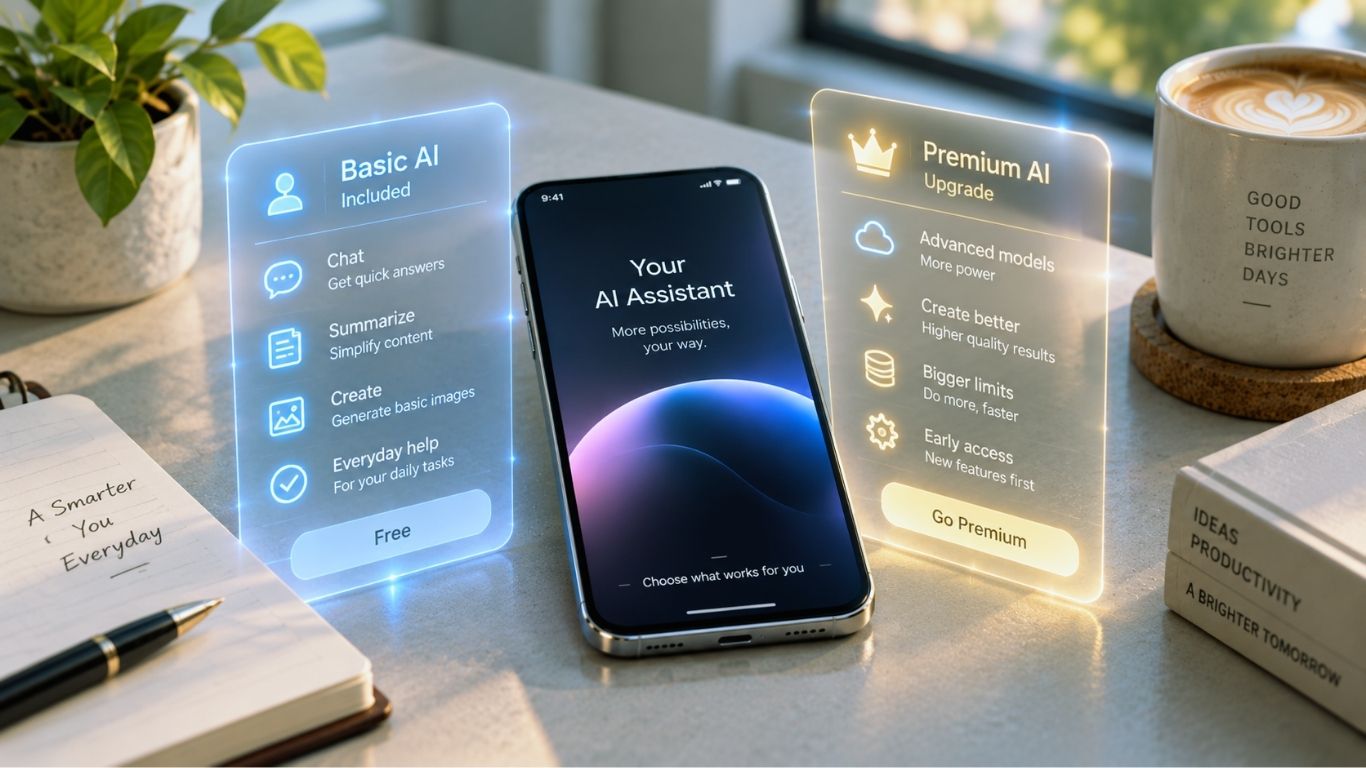
For example, Apple could theoretically give everyone a basic level of AI assistance while reserving more advanced capabilities for customers who need them.
This could look similar to other software services where normal features are free but higher limits, professional tools, or more powerful models require payment.
Again, this is a possible business model—not something users should assume is confirmed.
Siri Could Be One of the Biggest Areas to Watch

Siri is likely to remain an important part of Apple’s AI strategy because an assistant becomes much more useful when it can understand context rather than simply responding to individual commands.
A more capable assistant could eventually help with tasks such as finding information from messages, managing schedules, helping prepare emails, understanding what is currently displayed on the screen, or carrying out actions across multiple apps.
The more complex those requests become, the more processing they may require.
For everyday commands such as setting a timer, starting a call, or checking basic information, it would make sense for Siri to remain part of the standard iPhone experience.
The bigger question is whether much more advanced assistant features could eventually become a premium service.
For users, that distinction would be important. Most people probably would not want to pay monthly just to use normal voice commands. But professionals or heavy AI users might see value in a much more capable assistant if it could save them meaningful time.
AI Writing Tools Could Become More Powerful
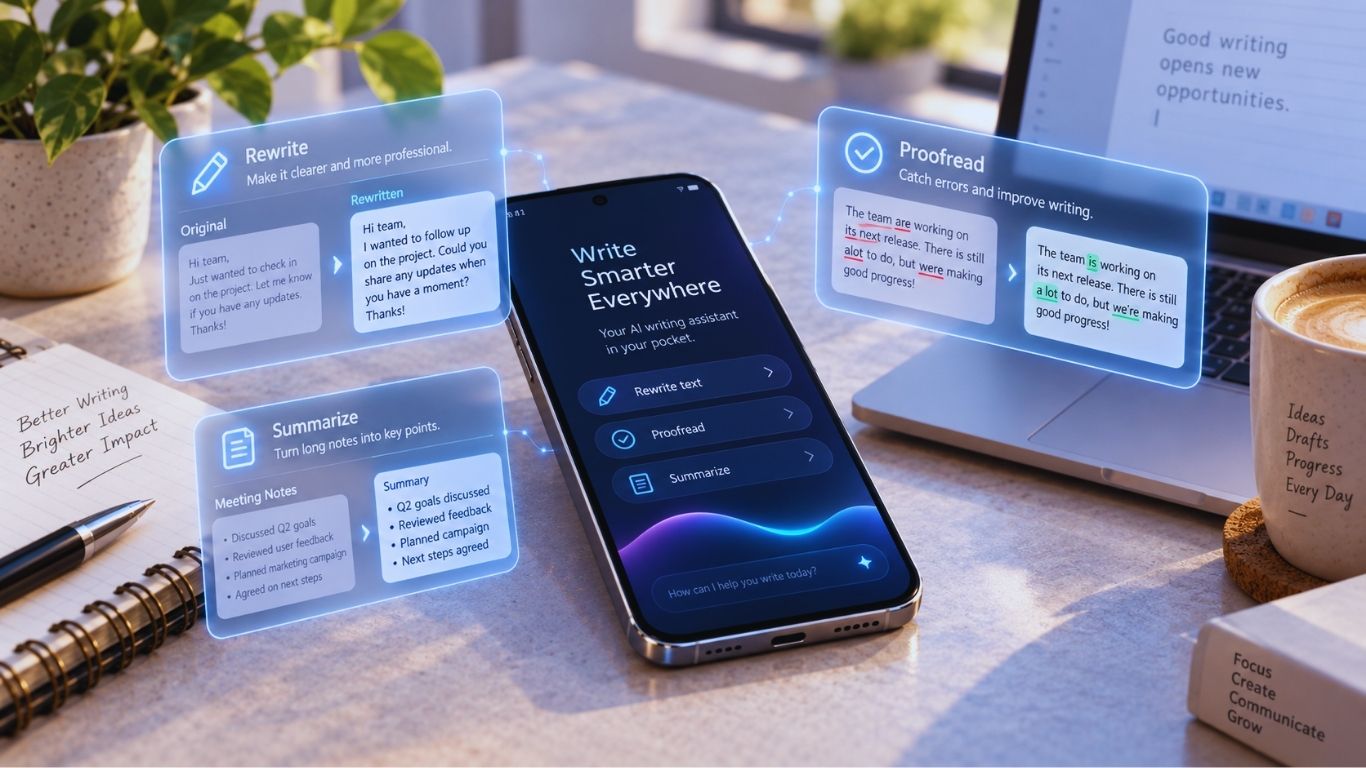
Writing assistance is another area where Apple could expand significantly.
Basic tools can help users rewrite a sentence, proofread text, change the tone of a message, or summarize information.
More advanced versions could potentially offer deeper editing, longer document analysis, custom writing styles, better context awareness, or professional productivity features.
If Apple ever introduces different AI tiers, writing tools would be one logical area where limits could differ.
A free user might receive basic assistance, while a premium plan could provide higher usage limits or more advanced processing.
That type of model is already familiar to people who use modern online software, which is one reason subscription discussions continue to appear around AI.
Does This Mean iOS 27 Itself Will Cost Money?
This is where headlines can become confusing.
There is a major difference between paying for iOS 27 and paying for an optional service inside iOS 27.
Apple has historically provided major iOS updates to compatible iPhones without charging users an upgrade fee.
A future premium AI service would not automatically mean the entire operating system had become paid.
A more realistic structure would be something like this:
Included with the iPhone: security updates, core iOS features, standard apps, basic Siri functions, device settings, privacy features, and normal system improvements.
Potential premium services: more advanced AI processing, larger usage limits, professional AI tools, or additional cloud-based capabilities.
This kind of structure would allow people to continue using their iPhones normally without another monthly bill while giving power users the choice to pay for more advanced features.
Why Some iPhone Owners Would Dislike the Idea
Even if premium AI features were optional, Apple would still face a major challenge: iPhones are already expensive.
A customer who pays a high price for a premium device may reasonably expect its major software features to be included.
Subscription fatigue is also real.
Many people already pay monthly for streaming services, cloud storage, productivity software, music, gaming, and other digital products. Adding another subscription just to unlock the most interesting capabilities of a phone could be frustrating.
There is also the question of expectations.
If a new AI feature is heavily promoted when a customer buys an iPhone but later requires an additional payment, some users may feel that the value of the device has changed.
Apple would therefore need to make the difference between included features and optional paid services very clear.
Apple 2026 MacBook Air 13-inch M5 Review: Specs & Features
There Could Also Be Benefits to a Premium AI Option
A paid AI tier would not automatically be bad for every user.
If the basic iPhone experience stayed strong, an optional plan could allow Apple to offer more expensive AI capabilities without forcing everyone to pay for them.
That could benefit users who actually need advanced tools.
For example, someone who regularly works from an iPhone might value stronger document summaries, advanced writing assistance, intelligent scheduling, or deeper automation.
A casual user who mainly calls, messages, browses, takes photos, and uses standard apps might have little reason to subscribe.
In that situation, the important question is not simply whether a feature costs money. The more useful question is whether enough functionality remains included for non-paying users.
On-Device AI Could Help Keep Some Features Free

One factor that could shape Apple’s approach is on-device processing.
When AI tasks can run directly on an iPhone, the company may not need to rely as heavily on expensive cloud infrastructure for every request.
That can offer several advantages.
It may reduce server costs, improve response times, allow some features to work with limited connectivity, and keep more personal information on the device.
However, there are limits to what a phone can process efficiently. The largest and most advanced AI models often require resources beyond what a mobile device can provide.
That means the future of iPhone AI may involve a mixture of on-device intelligence and cloud-based processing.
This balance could play a major role in determining which services remain included and which, if any, eventually become premium.
What Should iPhone Users Watch for?
Rather than worrying about every rumor, iPhone owners should pay attention to a few practical questions when Apple announces future AI features.
First, check whether a feature is processed on the device or requires cloud access. Cloud-heavy features may be more likely to have limits or additional costs over time.
Second, look closely at device compatibility. Some advanced AI features may depend on newer hardware rather than a subscription alone.
Third, check whether Apple describes a feature as part of iOS, Apple Intelligence, iCloud, or another service. Those distinctions can help explain how the feature is being offered.
Finally, wait for official pricing and availability details before assuming that a rumored feature will require payment.
That is especially important with future software releases, where plans can change before launch.
MacBook Air M5 vs MacBook Pro M5 for College Students 2026
Would You Need a Subscription to Use Your iPhone Normally?
There is no reason to assume that normal iPhone use must suddenly become subscription-only simply because Apple is investing more heavily in AI.
The most practical possibility is a layered experience.
Core smartphone features could remain available as usual, while optional cloud-based tools provide additional capabilities for people who want them.
That would be similar to how many digital products already operate: the basic product works on its own, while extra services are available for a recurring fee.
For most users, whether that is acceptable would depend on exactly where Apple draws the line.
If essential features remain included, premium AI could simply be another optional service.
If highly promoted or fundamental iPhone capabilities start moving behind subscriptions, users may view the change very differently.
Should You Wait for iOS 27 Before Buying an iPhone?
For most people, rumors about possible paid AI features should not be the main reason to delay an iPhone purchase.
More important factors include whether your current phone still meets your needs, how long the new device is likely to receive updates, battery life, camera quality, storage, performance, and whether the features available today are useful to you.
It is generally better to buy technology based on what it can do now rather than features that may or may not appear later.
If future AI tools become especially important to your buying decision, wait for Apple’s official announcements before choosing a device or paying for a service.
Final Thoughts
The discussion around iOS 27 paid features reflects a much bigger change happening across the technology industry.
AI is becoming part of everyday software, but powerful AI services can be expensive to operate continuously. That creates pressure for companies to decide how much intelligence should be included with a device and how much should become an optional service.
For Apple, one possible path would be to continue providing iOS updates and essential iPhone features without an additional charge while offering more advanced cloud-based AI capabilities through a premium plan.
Whether Apple ultimately chooses that model will depend on its product strategy, technical costs, competition, privacy approach, and how customers respond.
So the question may not be “Will Apple put the iPhone behind a paywall?”
A more useful question is: Which future AI features will remain part of the iPhone you already paid for, and which ones could become optional services?